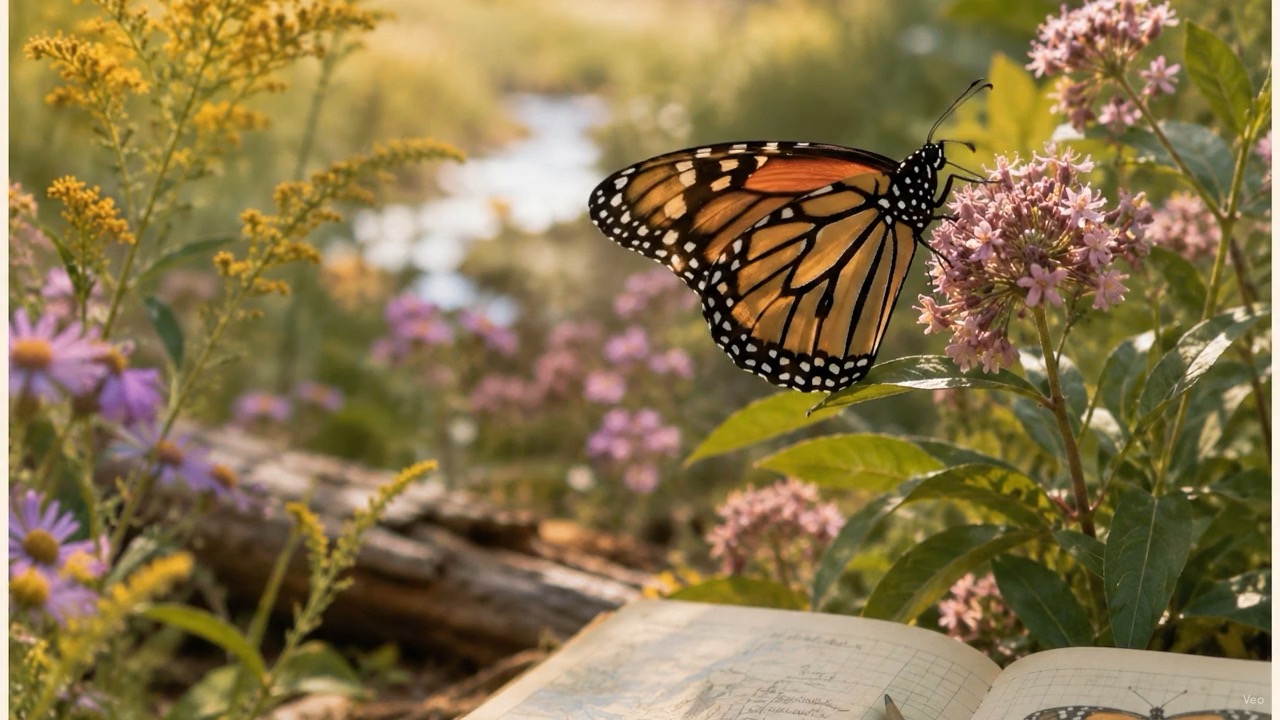
A place-based writing project
Every place has a story. Write one.
Draw a circle anywhere in the United States. Meet the plants, birds, insects and animals that have actually been recorded inside it. Then write its ecography — your account of a place and the lives it holds.
The idea
An ecography is a biography of a place
A biography tells the story of a person. An ecography tells the story of a place and everything living in it — what is there, how it got there, who noticed, and who was never asked. You are the author. The data is your evidence, not your conclusion.
You will be working with real records. Every species you see was recorded by a specific person or institution at a specific place and time, and published through GBIF — the Global Biodiversity Information Facility. Museums, university surveys, bird counts, and people with phones all feed the same database.
That means the data has a point of view. Part of your job is to notice whose.
Your circle can be anywhere. Your campus. The block you grew up on. A river you fish. A park you have walked past a thousand times without looking.
The most interesting ecographies are usually about ordinary places the author already knows — because you can check the data against your own eyes.
How it works
Three steps, about an hour
You can stop and come back. Everything you do is saved in this browser as you go.
Draw your circle
Click anywhere on a map of the United States, or search for a town, and a circle appears. You will see instantly how many biodiversity records fall inside it, and what kinds of life they are.
Open the map → 2Meet who lives there
Browse a photo field guide built from your circle — birds, mammals, plants, insects, reptiles, amphibians, fish, fungi. Each one comes with its Wikipedia entry, so you learn what it actually is. Collect the ones you want to write about.
Open the field guide → 3Write your ecography
Three short sections with prompts, your collected species beside you, and an export you can hand in as a formatted document or a PDF.
Open the writing desk →Why it matters
The data will not tell you what lives there
It will tell you what somebody wrote down. Those are different, and the gap between them is where the good questions live.
- More records usually means more observers, not more animals. City parks look richer than remote forest because more people with phones walk through them.
- Absence is ambiguous. Zero records might mean gone, never surveyed, never digitized, or filed under a name you did not search.
- Seasons skew everything. Most records come from spring and summer, when it is pleasant to be outside looking.
- Some knowledge never enters a database. What a farmer knows about a field, or what a family has watched happen to a creek over forty years, is real evidence and no occurrence record contains it.
Pick a place you already care about
It takes about thirty seconds to draw a circle. You can change it any time, and the field guide will rebuild itself around wherever you land.
Start with a circle →