Skip to examples
OPEN
Student resource · completed model
What a strong
annotation looks like.
These are examples, not scripts. Notice how each annotation moves from a concrete detail to an interpretation, then opens a question the reader could continue pursuing.
Choose a downloadable exemplar PDF ↓01
How to read the models
Notice the move,
not the answer.
- 1
Observe. Name a word, image, sound, route, or interface choice precisely.
- 2
Interpret. Explain what the detail makes possible or difficult.
- 3
Complicate. Ask what another narrator, image, or reader might see differently.
01 · Immersive ReaderTagging friction in a narrator’s voice
Built-in field log tags: importance confusion connection
Download this exemplar PDF ↓
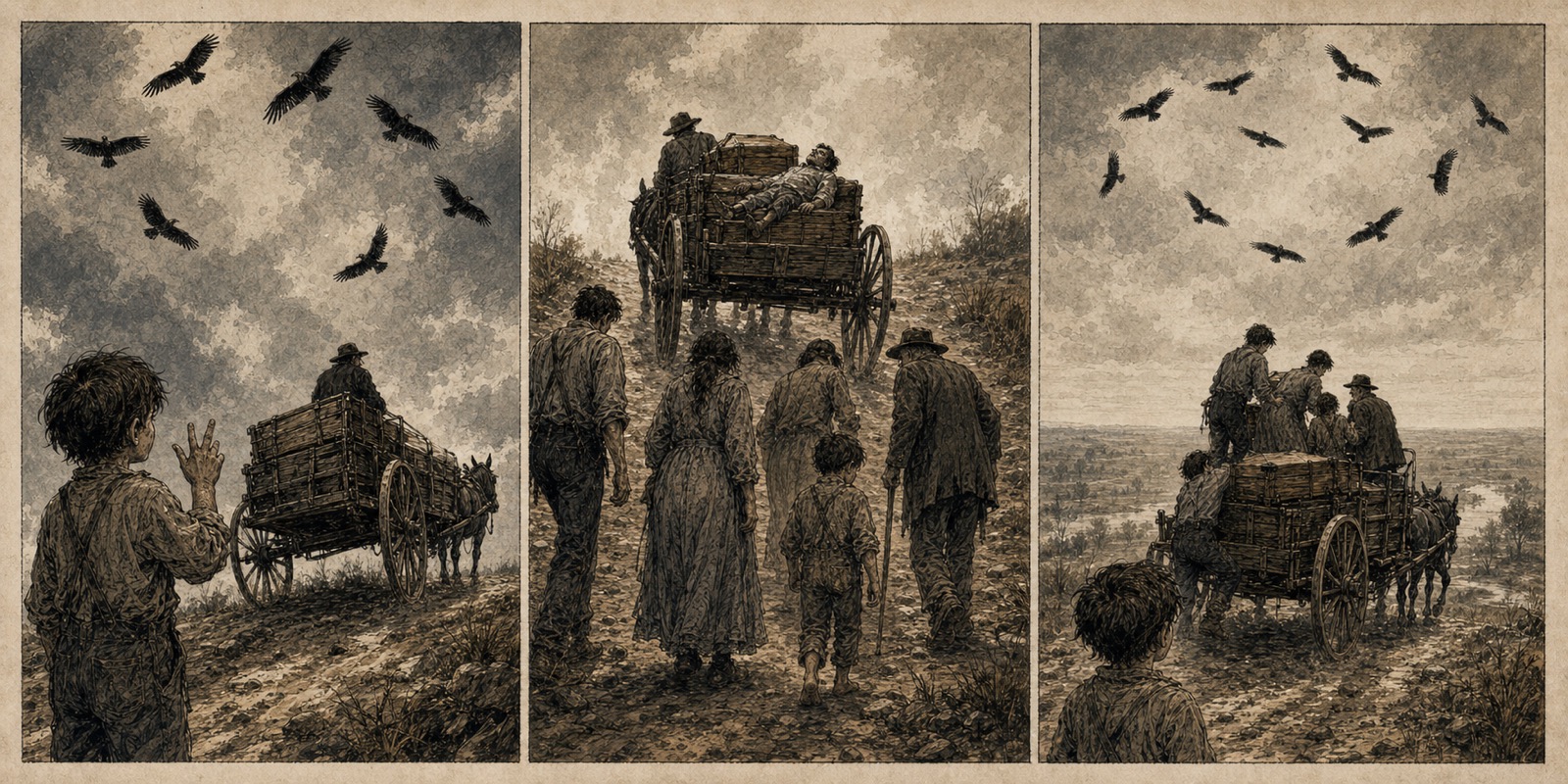
- Observation
- The people and wagon occupy the lower part of each frame while the birds command most of the sky.
- Interpretation
- The scale makes the journey look less heroic than exposed. The family moves, but the environment—and the reader’s knowledge of what the birds imply—controls the emotional frame.
- Question
- Would the scene feel different if the plate placed us at eye level with the family instead of above and behind them?
FarmRiverJefferson
- Observation
- The river crossing is geographically between departure and arrival, but narratively it takes up far more attention than either endpoint.
- Interpretation
- The map shows that distance in the novel is measured by difficulty, not miles. The river expands because it reorganizes bodies, possessions, and loyalties.
- Question
- Which other location becomes larger in the telling than it appears on the map?
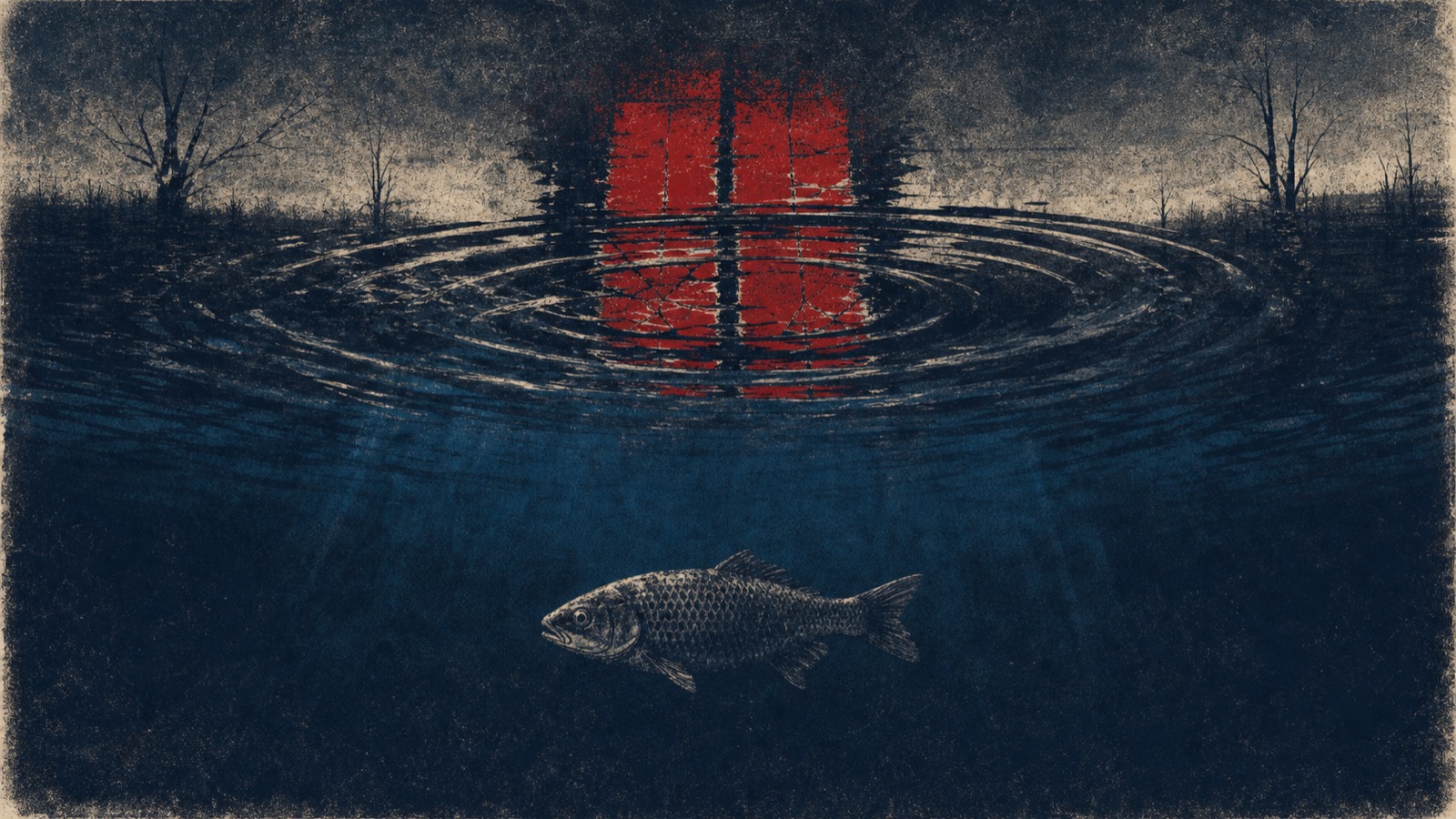
- Observation
- The fish is below the reflected house, separated by the waterline. The red window breaks into pieces across the ripples.
- Interpretation
- The image treats Vardaman’s sentence as a translation problem: the domestic world above cannot remain whole when it is carried into his way of seeing.
- Question
- What is gained—and what is distorted—when grief is translated into an image another person can see?
Completed synthesis
Putting the four modes in conversation.
Prompt: What becomes visible when the same novel is encountered through voice, image, map, and designed activity?
Across the four experiments, the journey stops looking like a single sequence that every character shares. The reader reveals how differently narrators organize experience; the illustrated plates make interpretation visible through framing; and the map shows that emotional distance does not match geographic distance. The fish activity pushes this further because Vardaman’s sentence cannot be reduced to information without losing what makes it matter. Together, the projects suggest that reading is not extracting the plot. It is noticing how form makes different kinds of knowledge possible.
What to notice: The response names evidence from all four modes, identifies a relationship among them, and ends with an arguable claim about reading.
Before you export your work
- I named a specific detail.
- I explained why the detail matters.
- I distinguished observation from interpretation.
- I left room for another reading.
- My final claim connects more than one experiment.
Return to the experiments ↗